Tracks
Liner Notes
Barukh habba (Psalms 118:26–29) is the last passage of hallel (Psalms of praise), but it is also sung independently as an opening “welcome” for various ceremonies—most commonly, weddings, joyous dedications, and consecrations. The phrase in the Psalm refers to the welcoming blessing by the priests in the ancient Temple in Jerusalem, which they pronounced to those arriving with their ritual sacrifices.
This melody is ubiquitous in western as well as Moroccan Sephardi repertoires, with numerous variants, and it is sung to various texts. Its most common association, however, is with the biblical shirat hayam (Song of the Sea, Exodus 15:1–19). It is also used for the Spanish-language poetic summary of the birkat hammazon (gratitude to God after meals): Bendigamos. The tune has an intriguing pedigree, with musical notation in an Amsterdam manuscript as far back as the 18th century. In his 1857 London compilation, the Reverend David Aaron de Sola proposed (albeit without substantiation) that it was an “ancient” melody in the Sephardi repertoire, even antedating Jewish settlement on the Iberian Peninsula. We do know that this barukh habba is basically the same, with small variations, as the one sung during the Revolutionary War on the occasion of the consecration of the new synagogue in Philadelphia, Mikve Israel, on September 13, 1782. That rendition occurred during a circular procession around the hazzan’s reading desk by the congregational dignitaries (“honored members”) as they carried the sacred Torah scrolls.
Lyrics
PSALM 118: 26–29
Translation: Pinto 1766
Blessed be he that cometh in the Name of the Lord: We bless you from the House of the Lord. God is the Lord, and it is he that hath granted us Light; bind the Sacrifice, with Cords, to the very Horns of the Altar. Thou art my God, and I will praise thee; Thou art my God, I will exalt thee. Render Thanks unto the Lord, for he is good, for his Mercy is for ever.
Credits
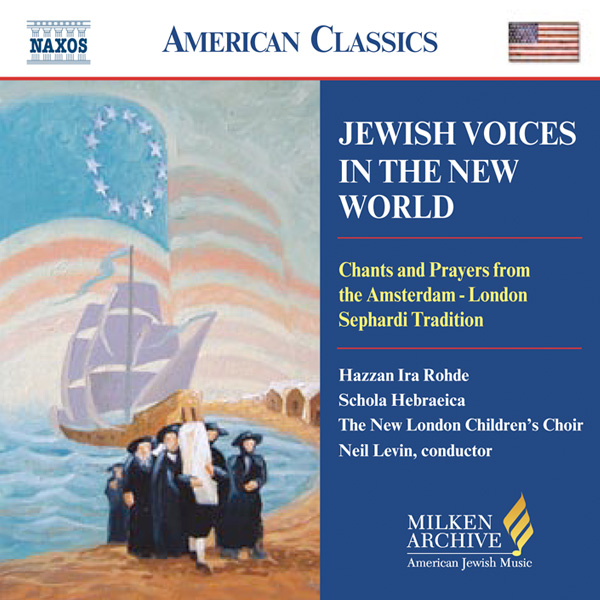
Composer: Amsterdam|Western Sephardi TraditionPerformers: Neil Levin, Conductor; Ira Rohde, Cantor; Schola Hebraeica, Donald Barnum, chorus master
Translation Source: Pinto, Isaac. Prayers for Shabbat, Rosh-Hashanah, and Yom Kippur According to the Order of the Spanish and Portuguese Jews. New York: John Holt, 1765–66.
Choral Preparation: Jonathan Fluker